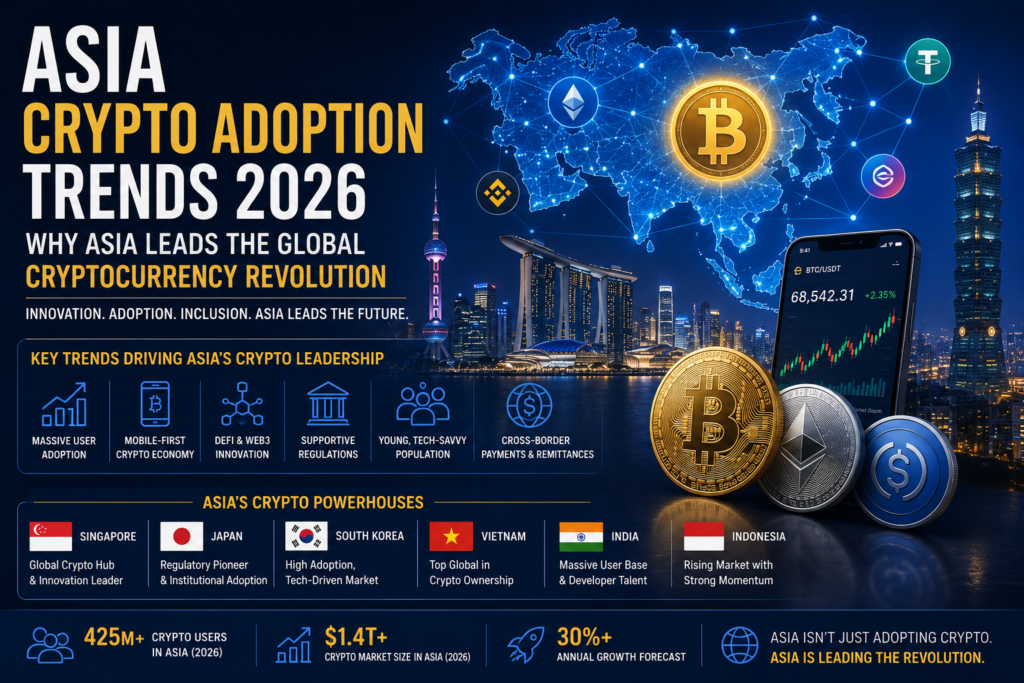

The global cryptocurrency industry continues to evolve at an extraordinary pace, and nowhere is this transformation more visible than in Asia. Over the past decade, Asian countries have become major drivers of cryptocurrency adoption, blockchain innovation, digital payments, and financial technology development.
From retail investors in India and Southeast Asia to institutional initiatives in Singapore, Hong Kong, Japan, and South Korea, Asia has emerged as one of the most influential regions in the global crypto ecosystem.
In 2026, Asia remains at the forefront of cryptocurrency adoption despite regulatory challenges, market volatility, and changing economic conditions. The region’s unique combination of technological innovation, mobile-first populations, growing financial inclusion, and government-led digital initiatives continues to accelerate growth.
This article explores the key trends shaping cryptocurrency adoption across Asia and examines why the region is expected to remain a global leader in blockchain and digital asset innovation.
The Rise of Cryptocurrency in Asia
Asia’s crypto journey began much earlier than many people realize.
Countries across the region quickly recognized the potential benefits of blockchain technology and digital assets. Over time, millions of users embraced cryptocurrencies for investment, payments, remittances, and decentralized financial services.
Several factors contributed to this rapid adoption:
- Large technology-savvy populations
- High smartphone penetration
- Growing internet access
- Expanding digital payment ecosystems
- Strong fintech innovation
- Increasing interest in alternative investments
Unlike many Western markets, where crypto adoption initially focused primarily on investment opportunities, several Asian countries integrated digital assets into broader financial and technological ecosystems.
Why Asia Leads Global Crypto Adoption
Asia’s leadership in cryptocurrency adoption is not accidental.
The region possesses several structural advantages that continue to support growth.
Massive Population Base
Asia is home to billions of people, including many younger consumers who are comfortable using digital technologies.
Younger generations tend to be more open to experimenting with emerging financial products, including cryptocurrencies.
Mobile-First Economies
Many Asian countries skipped traditional banking infrastructure and moved directly toward mobile financial services.
This created ideal conditions for digital wallets, crypto applications, and blockchain-based payment solutions.
Financial Inclusion Opportunities
Millions of people across Asia remain underserved by traditional banking systems.
Cryptocurrencies and blockchain-based financial services provide alternative access to savings, payments, and investment opportunities.
Innovation-Friendly Environments
Several Asian jurisdictions actively support fintech innovation through regulatory frameworks and public-private partnerships.
These initiatives have helped attract blockchain startups, investors, and developers.
India’s Expanding Crypto Ecosystem
India remains one of the most important crypto markets in the world.
Despite regulatory uncertainties and taxation policies, interest in cryptocurrencies continues to grow among retail investors, developers, and technology entrepreneurs.
Key Drivers of Adoption
India’s crypto growth is supported by:
- A large young population
- High smartphone usage
- Strong software development talent
- Expanding digital payment infrastructure
- Growing investment awareness
Blockchain Innovation
Indian developers are actively contributing to global blockchain projects, decentralized applications, and Web3 technologies.
The country has become an important hub for blockchain talent and innovation.
Long-Term Potential
As regulatory clarity improves, many analysts expect India to play an increasingly influential role in shaping the future of digital assets globally.
Singapore: Asia’s Crypto Innovation Hub
Singapore has established itself as one of the world’s leading cryptocurrency and blockchain centers.
The country combines financial sophistication with a supportive innovation environment.
Why Crypto Companies Choose Singapore
Key advantages include:
- Advanced financial infrastructure
- Strong regulatory oversight
- Global connectivity
- Business-friendly policies
- Access to capital markets
Institutional Participation
Singapore has become a preferred location for institutional digital asset initiatives, including tokenization projects, blockchain research, and fintech innovation programs.
Future Growth
The country’s balanced approach to regulation and innovation continues to attract blockchain businesses from around the world.
Hong Kong’s Digital Asset Revival
Hong Kong has re-emerged as a major player in the cryptocurrency industry.
Authorities have introduced licensing frameworks and initiatives designed to strengthen the city’s position as a digital asset hub.
Strategic Importance
Hong Kong offers:
- Access to international financial markets
- Strong legal infrastructure
- Deep capital markets
- Experienced financial institutions
Institutional Opportunities
The city’s regulatory framework aims to attract institutional investors while maintaining market integrity and consumer protection.
Regional Influence
Hong Kong’s success could influence broader digital asset adoption throughout Asia.
Japan’s Mature Crypto Market
Japan has long been recognized as one of the world’s most established cryptocurrency markets.
The country was among the earliest adopters of crypto regulation and licensing frameworks.
Strong Regulatory Foundations
Japan’s regulatory approach emphasizes:
- Consumer protection
- Exchange oversight
- Operational security
- Financial stability
Public Awareness
Japanese consumers generally have a high level of awareness regarding cryptocurrencies and blockchain technology.
Innovation Opportunities
Japan continues to explore blockchain applications across finance, supply chains, gaming, and digital identity systems.
South Korea’s Active Crypto Community
South Korea remains one of the most dynamic cryptocurrency markets globally.
The country is known for high retail participation and strong interest in digital innovation.
Key Adoption Drivers
South Korea benefits from:
- Advanced technology infrastructure
- High internet penetration
- Active investment culture
- Strong digital payment adoption
Crypto Trading Activity
The nation consistently ranks among the world’s most active cryptocurrency trading markets.
Emerging Opportunities
Blockchain gaming, decentralized finance, and tokenized assets continue gaining attention among Korean consumers and businesses.
Southeast Asia’s Rapid Growth
Southeast Asia represents one of the fastest-growing regions for cryptocurrency adoption.
Countries including Indonesia, Vietnam, Thailand, and the Philippines are experiencing strong growth in digital asset usage.
Financial Inclusion Benefits
Many consumers use crypto solutions for:
- Remittances
- Cross-border transfers
- Savings
- Digital payments
Growing Digital Economies
Rapid digitalization has created favorable conditions for blockchain innovation.
Startup Ecosystems
Blockchain startups are increasingly emerging throughout Southeast Asia, contributing to regional growth.
Stablecoins and Cross-Border Payments
Stablecoins have become a significant driver of adoption across Asia.
Unlike traditional cryptocurrencies, stablecoins aim to maintain relatively stable values.
Popular Use Cases
Stablecoins are frequently used for:
- International payments
- Business settlements
- Remittances
- Trading activities
Benefits
Users often value:
- Faster transfers
- Lower transaction costs
- Global accessibility
- Reduced settlement delays
As international commerce becomes increasingly digital, stablecoin adoption is expected to continue growing.
Institutional Adoption Across Asia
Institutional participation is becoming one of the most important drivers of crypto growth.
Banks, investment firms, and financial institutions are increasingly exploring digital asset opportunities.
Areas of Interest
Institutions are focusing on:
- Asset tokenization
- Digital custody solutions
- Blockchain settlement systems
- Digital asset investment products
Market Impact
Institutional involvement often increases market credibility and supports long-term ecosystem development.
Blockchain Beyond Cryptocurrency
While cryptocurrencies receive significant attention, blockchain technology itself is generating value across multiple industries.
Supply Chain Management
Blockchain improves transparency and traceability throughout supply chains.
Healthcare
Secure record management and data sharing solutions are emerging use cases.
Real Estate
Tokenization may improve liquidity and accessibility within property markets.
Government Services
Several governments are exploring blockchain applications for public services and administrative processes.
These developments contribute to broader blockchain adoption beyond digital assets.
Challenges Facing Crypto Adoption in Asia
Despite strong growth, several challenges remain.
Regulatory Uncertainty
Some jurisdictions continue refining their crypto regulations.
Businesses often need to navigate changing compliance requirements.
Security Risks
Cybersecurity threats remain a major concern.
Users and businesses must prioritize secure storage and operational practices.
Market Volatility
Cryptocurrency prices can fluctuate significantly, creating risks for investors.
Consumer Education
Many users still require greater understanding of blockchain technology, risks, and best practices.
Addressing these challenges will be important for sustainable growth.
The Role of Web3 in Asia
Web3 technologies are gaining momentum across the region.
Web3 refers to decentralized internet applications built on blockchain networks.
Popular Areas of Development
- Decentralized finance (DeFi)
- Blockchain gaming
- NFT ecosystems
- Decentralized social platforms
- Digital identity systems
Asian developers and entrepreneurs are playing a major role in building Web3 infrastructure.
Crypto and Financial Inclusion
One of the most promising aspects of cryptocurrency adoption is its potential contribution to financial inclusion.
Millions of individuals lack access to traditional banking services.
Digital asset solutions can help provide:
- Savings tools
- Payment capabilities
- Investment access
- Financial services
This potential is particularly relevant in developing regions of Asia.
Future Trends for Asia Crypto Adoption
Several trends are likely to shape the next phase of growth.
Increased Regulatory Clarity
More jurisdictions are expected to establish comprehensive crypto frameworks.
Institutional Expansion
Institutional participation will likely continue increasing.
Stablecoin Growth
Stablecoins may become increasingly integrated into payment ecosystems.
Blockchain Infrastructure Development
Governments and private companies are expected to invest further in blockchain innovation.
Greater Mainstream Adoption
As technology becomes easier to use, broader consumer adoption may accelerate.
Opportunities for Investors
Investors interested in Asia’s crypto ecosystem should monitor:
- Regulatory developments
- Blockchain startup growth
- Institutional adoption trends
- Stablecoin innovation
- Emerging Web3 projects
Understanding regional differences can help identify potential opportunities and risks.
Conclusion
Asia continues to lead the global cryptocurrency revolution through innovation, adoption, and technological advancement.
Countries such as India, Singapore, Hong Kong, Japan, South Korea, and several Southeast Asian nations are helping shape the future of digital finance.
The region’s combination of large populations, mobile-first economies, fintech innovation, and increasing institutional participation creates a powerful foundation for continued growth.
While challenges remain, Asia’s commitment to blockchain development and digital transformation positions it as one of the most important regions in the global cryptocurrency ecosystem.
For investors, businesses, and technology leaders, understanding Asia’s crypto adoption trends will be essential for navigating the next chapter of the digital asset industry.